Friday, 4 February 2011


Rethink and SANE in bed with pharma

Choosing Well ......goes to Jansen UK web site
An interactive map was recently published by the Choosing Well? Campaign (www.choosingwell.co.uk), a Janssen initiative in association with the leading mental health charities Rethink and SANE, and is designed to highlight local and regional disparities in care currently being provided for people in England with schizophrenia
extract - http://www.epolitix.com/latestnews/article-detail/newsarticle/mental-health-and-the-choosing-well-campaign/
from
Mental health and the Choosing Well? campaign
The APPG on mental health works hard to raise the profile of mental health in Parliament and holds frequent meetings and events to promote understanding of key issues. In the last Parliament, the group produced a powerful survey on the mental health of MPs, which concluded that the law forcing MPs to give up their seat for life if they are sectioned under the Mental Health Act for six months is discriminatory and urgently needs to be changed. As a group member, I will be looking to promote the recommendations made in this report, in particular around the need to challenge stigma and discrimination in Parliament.
Another key mental health issue the APPG is keen to raise awareness of is schizophrenia. 1 in 100 people are affected by schizophrenia and they should all have choice and access to the best possible care.
An interactive map was recently published by the Choosing Well? Campaign (www.choosingwell.co.uk), a Janssen initiative in association with the leading mental health charities Rethink and SANE, and is designed to highlight local and regional disparities in care currently being provided for people in England with schizophrenia.
The website brings together, for the first time, key data from multiple organisations and sources and thereby provides the broadest picture yet of how schizophrenia is currently being managed in England. Whilst encouraging best practice in the management of schizophrenia, the website highlights the role that 'choice' can play in ensuring the best possible standard of care and positive long term outcomes. This choice agenda is helping to extend a key part of the NHS reforms to mental health services, enabling people to make decisions on how and where they receive treatment.
Fiddaman lost his job at LandRover because he was unemployable?
alt.uk.law Jun 3 2001,
Your comments please
Taken from the Sunday Mercury
FORGOTTEN MAN
I've been frozen out of work for two years because of disability, says Bob
Meet Bob Fiddaman - Land Rover's forgotten man.
..........etc etc etc
reply 1
So why not just find yourself a new non-manual job outside Rover? Gven
that you feel so mistreated by them, I fail to understand why you want to
force them to re-employ you. What's the advantage of returning?
reply 2 GB
Perhaps the reason that Landrover cannot find him a job is the same as the
reason why (maybe) nobody else will employ him?
SEROXAT withdrawal zaps over & done with in 3 months - FIDDAMAN admits
Article Discussion: Discontinuing antidepressant can't be ru
by Fiddy on June 2nd, 2008, 1:17 am
http://neighbors.denverpost.com/viewtopic.php?f=16&t=9437847&p=221585
"The term "withdrawal" implies that you're addicted to a drug. But addiction is a complex pattern of behavior that involves craving, drug seeking, and needing more and more drug to achieve a desired effect. In that sense, antidepressants are not addicting"
I disagree. When I tapered off Paxil I used an oral syringe. I 'came down' by half a mg per week and it took me 18 months to taper down from 40mg per day to 22mg per day. That is NOT a discontinuation, that IS a withdrawal. Paxil IS addictive, there are thousands of stories of people suffering because they cannot taper off this drug.
After 18 months I went cold turkey. It took me 3 months to get passed the zaps, profuse sweating, anger outbursts, suicidal thoughts, craving (temptation to go back on Paxil) plus a whole host of other side effects.There are over 10,000 stories online from patients who have suffered withdrawal symptoms at the hands of Paxil. To suggest that antidepressants are not addictive is basically sticking your middle finger up to those that have... and still are suffering trying to taper off this drug.
Fiddy
BOB FIDDAMAN
BOB's recent comments
Zip Code: B32 1SF
Posts: 1
Joined: June 2nd, 2008, 1:09 am
Thursday, 3 February 2011
Fiddaman book is almost WROTE - Kathy Sharrad, editor or ghostwriter?

For the past 4 months or so I've been painstakingly working with my editor, Kathy Sharrad. We have chopped and changed and even stripped the original PDF file that has been available for download for the past year or so.
A foreword has been written for me, you will have to wait and see who it is that has wrote it. "


Wednesday, 2 February 2011
James L Harper - Scientology parasite
http://bobfiddaman.blogspot.com/2010/09/james-l-harper-trb-scotland-uses.html
http://bobfiddaman.blogspot.com/2010/09/james-l-harper-scientology-video-making.html
http://bobfiddaman.blogspot.com/2010/09/james-harper-scientology-service.html
http://bobfiddaman.blogspot.com/2010/09/james-l-harper-is-prozactruth-com.html
http://bobfiddaman.blogspot.com/2010/09/james-l-harper-road-back-inc.html
Tuesday, 1 February 2011
Hugh James, worst of comparator class, is only drug patients get off & stay off.


Data collection reference:
Department of Health; NHS; Prescription Cost Analysis (PCA) - England.
1998 to 2007:
http://www.dh.gov.uk/en/PublicationsAndStatistics/Statistics/StatisticalWorkAreas/StatisticalHealthCare/DH_4086488
2008:
http://www.ic.nhs.uk/webfiles/publications/PCA%202008/PCA%202008.pdf

to read more go to - http://tuesday1st.blogspot.com/
Monday, 31 January 2011
NHS could already have saved £1,072 billion - but where was the therapy?
http://www.network54.com/Forum/281849/message/1296504839/they+could+already+have+saved+%A31%2C072+billion+-+but+where+was+the+therapy-
If you had read it you would know that I have not only studied the ever increasing SSRI, SNRI prescribing trends - but also the costs of those prescriptions over the same period and what has influenced those.
It highlights the fact that the "Report of the CSM Expert Working Group on the Safety of Selective Serotonin Reuptake Inhibitors (SSRIs)" published December 2004 and "House of Commons, Health Committee's examination into The Influence of the Pharmaceutical Industry" April 2005 caused an anomaly in prescribing trends.
It also shows that the Government appears to have used the two reports to force the net cost of the drugs down far beyond what would be expected by end of license reductions. Since 2004, when SSRI, SNRI drug class annual net costs peaked at £355.4 m, the net costs have reduced to a 2009 low of £187.5 despite annual total prescriptions increasing from 18.4 m to 26.9 m over the same period . the lowest annual total net cost since 1998/9 when only 9.9 m prescriptions were issued.
So the government did clamp down on the industry but to what cost . on one hand - letting another insidious class of drugs, Statins, to be sold as OTC drugs for one introducing stringent monitoring for mental health and anti social behaviour prognosis problems in pregnant women, mothers and babies lining up the next generation of prospective MH patients for another and probably a whole myriad of other things they have sneaked through!
On the other hand it makes it harder to complain to government officials that the pharmaceutical companies have it all their own way or to complain that the government have not acted responsibly or in the best interest of the NHS and the population although since the price reductions began they seem to have completely ignored the CSM Expert Working Groups report which found ALL drugs in the class lacking in efficacy and safety.
You seem to be very concerned about there being no money for alternative therapies and supplements . so what about this lack of funding and those SSRI, SNRI price reductions and the substantial savings the government have made since 2004
In 2009 the 26.9 m SSRI, SNRI prescriptions total net cost was £187.5 m, a median average net cost per prescription of £6.69.
26.9 m SSRI, SNRI prescriptions at the peak 2004 price of £355.4 m, equates to a median average net cost per prescription of £13.19 showing a projected saving for the period 2004/5 to 2009 excluding accrued 10% inflation of £662.58 m.
26.9 m SSRI, SNRI prescriptions at the peak 2004 median average net cost per prescription of £19.23 would have cost £518.12 m and shows a projected saving 2004/5 to 2009 of £1,072 billion.
The UK Government cannot refute their own information, facts and figures and I would love to know why the government have not used at least some of these saving to put in place the alternative therapies recommended in the "NICE Clinical Guidelines 23: Depression" published December 2004 as I'm sure you would.
extracted from - http://health.groups.yahoo.com/group/SSRI-Crusaders/message/35823
Hugh James Solicitors focused on Seroxat which was NOT the WORST drug in class

SEROXAT suicide (young adults) lower than active comparator
Suicide, suicidal thoughts and self-harm
http://www.mhra.gov.uk/home/groups/pl-p/documents/committeedocument/con003479.pdf
5.2.2 The Group was informed that the MAH has conducted further analysis of their clinical trials data to examine:
5.2.4 The Group commented that this was contrary to the data from clinical trials where paroxetine was compared with an active comparator. In these studies the incidence of suicide-related events in young adults treated with paroxetine was lower than that in the active comparator group, but this was not sufficiently reassuring given that this may indicate that the problem may be worse with other active comparators. The Group commented that it would be important to obtain data on efficacy of paroxetine in young adults.
Hugh James has to show drug is worst of comparator class

"The Seroxat Group Action does not involve suicide issues; only discontinuation where Seroxat is the worst of the comparator treatments "
Seroxat Group Action does not involve suicide issues - Mark Harvey said

Date: 06/02/2008 13:26:15
To: Jeremy Bryce
Subject: RE: ' Implementation of warnings on suicidal thoughts and behaviour in antidepressants' ..................source MHRA
Thank you for this.
The Seroxat Group Action does not involve suicide issues; only discontinuation where Seroxat is the worst of the comparator treatments."
We found some time ago that there was a Class Phenomenon for suicidal ideation and acts which meant that, together with other notable problems both in science and in law, successful litigation was unlikely. That was a decision I had to make irrespective of my personal concerns about these drugs and their links with suicidal ideation. It is noteworthy however that the original MHRA, EMEA and FDA investigations of SSRIs arose as a direct result of the focus on Seroxat and Paxil by the litigators both here and in the US and the media. That focus has highlighted the class issue.

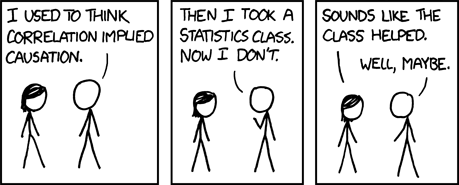
It *could* just be coincidence
It *could* just be coincidence
Hypothesis: a decent knowledge of mathematics reveals that correlation is not causation, that most coincidences actually are the result of chance
 Visit xkcd, a webcomic of romance, sarcasm, math and language.
Hypothesis: a decent knowledge of mathematics reveals that correlation is not causation, that most coincidences actually are the result of chance
ANTI VAX march a massive success - just like the PAXILPROTEST
Anti Vax march a massive success
As you can see from this photo, the anti-vaccination march in Edinburgh today has been a massive success.
If you can't spot it, the protest is behind the bloke in the brown jacket.
(Thanks to @endless_psych for the photo) 12 December 2009

http://jabsloonies.blogspot.com/2009_12_01_archive.html
As you can see from this photo, the anti-vaccination march in Edinburgh today has been a massive success.
If you can't spot it, the protest is behind the bloke in the brown jacket.
(Thanks to @endless_psych for the photo) 12 December 2009

http://jabsloonies.blogspot.com/2009_12_01_archive.html
Dystonia from a flu vaccine? ...... hoax
The movements and symptoms that Ms. Jennings displays on the public videos I have seen (linked to above) are not compatible with the diagnosis of dystonia, or any other movement disorder. Dystonia is one type of involuntary contraction of muscles. It can be reduced or exacerbated by certain movements or positions, and there are "task specific" dystonia, such as writer's cramp, that come out only with certain activity. Jennings does not display the type of movements that are consistent with dystonia. Her speech and movement are, however, very suggestive of a psychogenic disorder.
This also seems to be the consensus opinion of experts who have viewed this case. The Dystonia Medical Research Foundation had this to say about the case:
Because of the concern of individuals with dystonia as to whether or not to get a flu shot because of this reported case, we have sought the opinion of dystonia experts on this case. Based on the footage that has been shared with the public, it is their unanimous consensus that this case does not appear to be dystonia.
The one news report that I saw that actually consulted an expert for their opinion was Fox News. Leigh Vinocur, and emergency room physician, was interviewed and relayed the opinion that the neurologists she consulted were of the opinion that Jennings' symptoms were consistent with a psychogenic disorder. In other words - her symptoms are not neurological, they are psychological. This does not mean she has any insight or voluntary control over her symptoms - they are involuntary and "real" - just not neurological in origin. Symptoms such as this are not uncommon reactions to emotional stress in some individuals. Given the evidence presented, I think this is a reasonable opinion.
read on
http://scienceblogs.com/insolence/2009/11/dystonia_from_a_flu_vaccine.php
Sunday, 30 January 2011

Class actions - no scrutiny of pharmaceutical companies by UK courts in the last 15 years
"There has been no scrutiny of pharmaceutical companies by UK courts in the last 15 years," said Beth Reay, one of the lawyers at Irwin Mitchell representing the families. "If you look at group actions that have been brought, they have come to an end not because the judge has said they lack merit, but because of funding constraints."
http://www.guardian.co.uk/law/2011/jan/28/legal-aid-withdrawn-birth-defects
Families devastated after legal aid withdrawn for birth defects caseParents say epilepsy drugs containing a controversial anti-convulsant are to blame for disabilities
Share34 Afua Hirsch, legal affairs correspondent guardian.co.uk, Friday 28 January 2011 19.57 GMT Article history
Karen Buck and her daughter Bridget, 12, outside the law courts in London. Campaigners believe hundreds of children suffered birth defects as a result of drugs such as Epilim. Photograph: Graham Turner for the Guardian
When Samantha Scott wanted to have a baby, she consulted her neurologist about whether it was safe. She has epilepsy and was concerned that her medication, Epilim, could be unsafe in pregnancy.
"The doctors said it was fine," said Scott, 31, from Cumbria. "In fact, they upped my dose."
But Scott's daughter Faith was born with an extra digit, a cleft palate, a hole in the heart, and no muscle tone. Now aged seven, Faith has a mental age of two and weighs only two stone (13kg). She has spent most of her life so far in hospital.
Faith is one of hundreds of children campaigners believe suffered birth defects as a result of drugs such as Epilim, which contain a controversial anti-convulsant called sodium valproate.
"We have 624 children on our books from these drugs and 351 are from mothers who were taking Epilim," said Janet Williams, secretary of OACS, the organisation for anti-convulsant syndromes. "That is nowhere near the figure for the total number of children out there who are actually affected."
Six years ago, Sheffield-based lawyers at the national law firm Irwin Mitchell began a legal action against Sanofi Aventis, the manufacturer of Epilim, on behalf of 164 children whose mothers say they suffered birth defects because the drug was taken during pregnancy.
The case was publicly funded by legal aid through the Legal Services Commission, and the lawyers say they have evidence proving Sanofi is responsible for the injuries, and is liable to pay compensation.
But in November, six weeks before the trial was due to start, the LSC announced it was withdrawing funding. Today, the families attended the Law Courts in London to hear the LSC confirm its intention before Mr Justice Eady, although formal termination of the case was adjourned until May.
"Our clients are understandably devastated that their case will never be heard in court after six years of preparation for trial," said David Body, a partner at Irwin Mitchell who was representing the families. "This is exactly the kind of wide public interest case the LSC should be funding … now it will never come to court."
In a statement defending its decision, the LSC said that it had "great sympathy" with the families, but that its legal experts had advised against backing the case any further. "We have great sympathy with those who claim to have had adverse effects in connection with this medication, but our funding decisions must always be based on solid legal grounds."
Legal aid funding, already only available in a small number of personal injury cases, could be removed altogether under proposals currently being considered.
But claimants say the growing impossibility of funding cases such as the Epilim action is leaving pharmaceutical companies increasingly unaccountable.
Sanofi denies all liability for the birth defects that the families say are caused by Epilim, but in a similar class action brought against one of its affiliate companies in the US, it has settled, leading to calls for a review of UK law. More than 70 MPs have signed an early day motion about the case
"Four major drug companies have gone through the litigation and never gone to court," said Janet Stock-Pollard, who has two children that suffered birth defects after she took Epilim during her pregnancies. "The law appears to protect the drug company and not the consumer."
Emma Friedmann, whose son Andy is 12 years old with a mental age of three and is one of the claimants in the UK case, says that the lack of legal aid funding denies vulnerable people access to justice.
"Andy has been damaged for life, and he's not allowed his claim to be heard in court," she said. "Everyone who uses pharmaceutical products is less safe because of this. If you take a product and you or your dependants have a problem with it, you will not be successful in court."
"There has been no scrutiny of pharmaceutical companies by UK courts in the last 15 years," said Beth Reay, one of the lawyers at Irwin Mitchell representing the families. "If you look at group actions that have been brought, they have come to an end not because the judge has said they lack merit, but because of funding constraints."
"This case demonstrates most starkly where you have inequality between claimant and vastly well funded defendant," said Linda Lee, president of the Law Society. "Defendants are able to throw money at the case to stop it getting near court.""The settlement in the American case has been reached on a confidential basis, so we don't know exactly what was agreed," said Body. "But my guess is that because in the US it would have been tried in front of a jury, the pharmaceutical company there was more likely to settle."
Epilim litigants could face costs order?
End to epilepsy drug action delayed
By Cathy Gordon, PA 28 January 2011
http://www.independent.co.uk/news/uk/home-news/end-to-epilepsy-drug-action-delayed-2197167.html
A move to discontinue legal action brought by families who blame an epilepsy drug for causing defects in their children suffered a delay today.
Claims by more than 150 families were expected to be formally discontinued at a hearing before a judge at the High Court in London.
But Mr Justice Eady was told that a “difficulty” had arisen which meant that the proceedings would have to be adjourned.
Lawyers representing the families had earlier announced they had been forced to abandon the trial of the action following the withdrawal of legal aid.
The Legal Services Commission (LSC) said in November it was no longer funding an action against the makers of sodium valproate, a drug used to prevent epileptic seizures.
Claimants allege that the drug, also known as Epilim, caused a range of birth defects, including spina bifida, damage to the heart, learning difficulties, cleft palate and deformities of the hands and feet.
They have been pursuing a legal action for damages against manufacturer sanofi-aventis, claiming there were inadequate warnings about possible harm in the 1990s.
The firm has denied the claims, saying it has always provided appropriate precautions and warnings on the risks associated with possible side-effects of the medicine.
The plan for today was for lawyers for the families to advise the judge that the case against the manufacturers must be discontinued because continuing without legal aid funding would place their clients at “too great a financial risk”.
But the proceedings were adjourned for clarification to be sought relating to the terms of a proposed final order in the case.
Mr Justice Eady heard that the defendant would be taking instructions from representatives in France relating to one part of the order – that concerning the circumstances in which it would seek to enforce costs at any time in the future.
The court heard that there may have to be further consultation with all of the claimants by their lawyers to explain the situation to them with regard to the costs implications – a process which could take three months.
A further hearing is now expected to take place at the High Court in May.
Announcing the move to discontinue recently, solicitors Irwin Mitchell said their clients were “devastated” that their case would never be heard in court after six years of preparation for trial.
Despite the fact that the legal action has had to be dropped, families have vowed to continue their campaign.
A Legal Services Commission spokesman said: “Following advice from counsel, the Legal Services Commission has withdrawn legal aid funding for the multi-party action claim against the makers of the drug Epilim.
“Before making the decision, LSC had to await the exchange of evidence and the provision of comprehensive opinions from counsel – this process was only completed by the solicitors in late October.
“The claimants then exercised their right to appeal to a panel of lawyers who are independent of the LSC. This panel upheld the decision to withdraw funding.
“We have great sympathy with those who claim to have had adverse effects in connection with this medication, but our funding decisions must always be based on solid legal grounds.”
Subscribe to:
Posts (Atom)