Legal aid withdrawn from anti-epilepsy drug caseFamilies likely to abandon case aimed at compensating children born with disabilities after mothers took drug during pregnancy
http://www.guardian.co.uk/society/2010/nov/08/legal-aid-anti-epilepsy-drug
Share5 James Meikle guardian.co.uk, Monday 8 November 2010 10.23 GMT Article history
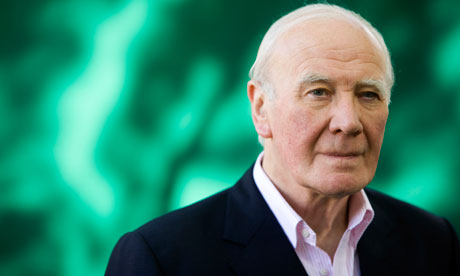
Liberal Democrat MP Sir Menzies Campbell said the legal aid decision needed to be reviewed to see if the families could continue to get financial support for the drug case. Photograph: Murdo Macleod
A landmark legal case by families of children with physical and mental disabilities against a multinational pharmaceutical company is likely to be abandoned after legal aid was withdrawn.
The families say manufacturers of an anti-epilepsy drug taken by mothers in pregnancy should pay compensation because the children's conditions resulted from the medication.
But the government's Legal Services Commission, which is believed to have provided more than £3m to help the families prepare for the action, decided to end its financial support just three weeks before hearings were due to begin in the high court in London.
The families' lawyers said the "bitterly disappointing" decision had probably forced the abandonment of the action, which could have potentially paid out compensation reaching tens of millions of pounds. One family accused the commission of being responsible for "a complete waste of time and money".
The commission told its solicitors, Irwin Mitchell, on 26 October it was pulling out. It told the Guardian: "Legal aid is no longer funding an action against the makers of the drug Epilim. However, because proceedings are still ongoing we are unable to comment further."
The former Liberal Democrat leader Sir Menzies Campbell is to press the justice secretary, Kenneth Clarke, to review the commission's decision.
The case, which was in preparation for six years, was taken by families of 100 children. They allege the children were damaged in the womb because their mothers had taken Epilim, the brand name for a drug whose active ingredient is sodium valproate. The drug is used to treat and reduce the risk of seizures in people with epilepsy, although the company says it is not a first-choice treatment for women of child-bearing age.
The focus in the court case would have been on 10 of the children. The lawyers say they represent families of a further 169 children who claim they also suffered deformities as a result of their mothers taking Epilim.
The case might have resulted in one of the UK's most significant medical compensation packages since thalidomide. It is thought to be the first made against a pharmaceutical company under the 1987 Consumer Protection Act, governing companies' responsibility for the safety of their products.
The families did not seek the banning of valproate, which has been on sale since 1972 and been the subject of warnings over its use by researchers and medicines safety advisers. They were prepared to recognise its importance in controlling epilesy, but maintained its manufacturers had been slow to issue warnings over possible side-effects.
The manufacturer, sanofi-aventis, was preparing to defend the action, which will not be formally completed until the families withdraw their case in court on 15 November.
David Body, head of medical law at Irwin Mitchell, said the news was disappointing and it was likely the claim would have to be discontinued.
"This is a case which we were ready to fight in which there were real clinical and legal issues at stake – both for our injured clients and for consumers generally – so far as prescription drugs are concerned," he said.
"The medical and scientific community first identified and reported on the effects of sodium valproate – Epilim – as long ago as 1980. Thirty years on from that first report, it now seems that this case cannot go ahead to explore the reasons why these children have been injured. If the courtroom door is closed against those children, I think the manufacturer sanofi-aventis should take responsibility for the effects of its drug and to compensate the children injured by it, in line with the social contract that it sees as the centre of its business strategy.
"Until sanofi does recognise this responsibility, the cost of caring for the children its drug has injured will continue to be borne by the families of those injured children, living with the after-effects day to day, and by the taxpayer through benefits, social care and the cost of special education. The challenges that each of these families face will never go away."
Sanofi-aventis said it had sympathy for the claimants but it had always believed the case would fail.
"Sodium valproate remains the most effective treatment of generalised epilepsy and for many patients it is the only medicine that will effect adequate seizure control," a company spokesman said.
It had "always provided appropriate precautions and warnings on the risks associated with possible side-effects of this medicine, including possible risks to the unborn child, in line with developing scientific knowledge."
Sodium valproate was not recommended as a first choice for women with epilepsy of child-bearing potential, he said. "The benefits and the risks of anti-epileptic therapy in women of child bearing potential must be carefully evaluated."
The company supported research on the risks and benefits of sodium valproate in all patients.
Campbell said a family in his constituency of North East Fife was involved in the legal action. "These cases demonstrate terrible tragedy for those who have been affected. It would only be right and proper for a review to be carried out to see whether it is possible to give the plaintiffs financial support to pursue their action."
The government's drug regulator, the Medicines and Healthcare Products Regulatory Agency, said it was widely recognised that women who took anti-epilepsy drugs during pregnancy had "a higher risk of having a child with a birth defect than women in the general population – it is estimated that the risk is two to three times higher".
Thalidomide was developed as a sedative in Germany in the 1950s and was prescribed for pregnant women with morning sickness. In the UK about 2,000 babies were born with birth defects to mothers who had taken the drug and there are currently more than 450 thalidomide survivors in the country. The drug was marketed by Distillers , now part of the Diageo group, until it was voluntarily withdrawn in November 1961. A famous Sunday Times campaign in the 1970s helped families win a compensation deal in 1973. A trust administers payments in the UK and in January the government offered a formal apology as well as a new £20m compensation package.
Seroxat is also known as Paxil and Aropax. Blog exposes Bob Fiddaman Human rights abuser who won two SCIENTOLOGY CCHR (human rights!) awards.
blogs created to prevent or detect a crime http://www.opsi.gov.uk/acts/acts1997/ukpga_19970040_en_1
This blog is brougt to you consistent with subsection 3 of the Protection from Harassment Act - i.e. blogs created to prevent or detect a crime http://www.opsi.gov.uk/acts/acts1997/ukpga_19970040_en_1
Monday, 8 November 2010
Epilim = Depakote and marketed for psychiatric conditions !
Valproate semisodium (INN) or divalproex sodium (USAN) consists of a compound of sodium valproate and valproic acid in a 1:1 molar relationship in an enteric coated form. It is used in the UK, Canada, and U.S. for the treatment of the manic episodes of bipolar disorder. In rare cases, it is also used as a treatment for major depressive disorder, and increasingly taken long-term for prevention of both manic and depressive phases of bipolar disorder, especially the rapid-cycling variant. It is also used in the US for the treatment of epilepsy, chronic pain associated with neuropathy, and migraine headaches. Its chemical name is sodium hydrogen bis(2-propylpentanoate). The extended release formulation allows for a single daily dose.
In the UK semisodium valproate has been sold for a few years as the proprietary drug Depakote and marketed for psychiatric conditions only. It is about five times the price of sodium valproate, which has been marketed for around 30 years as Epilim by the same company for epilepsy and is also available from other manufacturers as a generic product.
http://en.wikipedia.org/wiki/Valproate_semisodium
Legal aid for epilepsy drug court case denied - LSC concluded the case is not sufficiently likely to succeed
Families denied legal aid for epilepsy drug court case
http://www.bbc.co.uk/news/uk-11707386
Sodium valproate - or epilim - is taken to prevent seizures in the brain Dozens of families who blame an epilepsy drug for causing birth defects in their children say they are devastated that legal aid to sue its maker has been withdrawn.
Women who took sodium valproate in the 1990s claim they were not given adequate warnings of possible harm.
The Legal Services Commission, which runs legal aid, has concluded the case is not sufficiently likely to succeed.
Manufacturer Sanofi Aventis denies failing to provide proper warnings.
Spina bifida
About 80 families have begun action for damages against the firm, claiming the drug - also known as epilim - caused severe disabilities in children including spina bifida, heart damage and learning difficulties.
BBC health correspondent Adam Brimelow said the refusal of legal aid meant this action, which had been seven years in the planning, now appeared close to falling apart just days before it was due to go to the High Court.
Karen Buck and John Coyle say they were not made aware of any risks while pregnant with Bridget Karen Buck and John Coyle, whose daughter Bridget is severely handicapped, said they were devastated legal aid had been pulled just before the case was due to be heard.
Mr Coyle, from Stanmore in north-west London, told the BBC: "As a family we feel devastated because the case has gone on for over six years and the legal aid have funded it all the way along.
"Everybody has the belief that it [the case] has a better chance of winning than not, and just everybody is devastated that the finances have been pulled."
Bridget's mother took an increased dose of epilim during her pregnancy in 1997/8, but said she was not made aware of any potential risks to her child.
Her daughter has spina bifida, is unable to walk or talk, is herself epileptic, and requires 24-hour care.
Mr Coyle said: "There didn't seem to be any information available at the time Karen fell pregnant about taking epilim in pregnancy.
"I think the information has definitely improved quite a lot. They've become more aware and have accepted more that there are a lot of risks of problems in pregnancy with epilim, I'm not sure the drug company has accepted full responsibility."
Sanofi Aventis said it had sympathy for the claimants but insisted it had always provided appropriate warnings.
The company said it regularly provided authorities with updated safety data.
Epilepsy is the most common serious neurological disorder affecting people of all ages, with one person in 50 expected to develop it at some time in their life.
Sodium valproate is prescribed to people with epilepsy to prevent seizures in the brain.
Sunday, 7 November 2010
Seroxat cold turkey - Fiddaman got over it in three months
Fiddy said...
Hi
First I'd like to take this opportunity to introduce myself.
My name is Bob Fiddaman and I live in the UK.
For sometime now I've been campaigning here in the UK regarding the dangers of Seroxat
My blog, Seroxat Sufferers, Stand Up and Be Counted, blows the lid on the corrupt activities between the makers of Seroxat, Glaxosmithkline, and the
Medicines Healthcare products Regulatory Agency (MHRA).
It's really time for you all to stand up and be counted and to make noises regarding the suppression of the clinical trails for Seroxat. .We, a group of campaigners, are pushing for the drug to be banned completely as collectively we have all found evidence that Glaxosmithkline also suppressed the adult clinical trial evidence.
The side effects of this drug can be debilitating, I know - I was on it for 6 years - try to wean off it for 18 months until eventually going cold turkey - that was actually the worst three months of my life but I had made the decision that it was not going to run my life anymore.
Read the articles on my blog from your average Joe, hear stories of the zaps, the suicidal thoughts, the homicidal thoughts, the feeling of helplessness and lack of empathy toward others. Watch videos and see or at least judge for yourselves if Glaxosmithkline are lying.
Yes, it helps some people but more and more people are coming forward now with their horror stories.
Anyway, enough of the chat.
Pay my site a visit, it's already being monitored by GSK and the MHRA - They can't do anything about it because it will highlight the cause. You will be astounded at the correspondence I have had with the MHRA and receently they have actually tried to gag me by throwing a copyright act in the mails they send me. Bit I refuse to bow down to this bullying. The public have a right to know exactly what is going on with the prescribed drugs we take.
Everyone deserves proper healthcare - Seroxat, as we know it can be fatal.
Thank you for the rant and I hope to hear from you should you wish to pay a visit to my blog.
I can be contacted at fiddaman64atblueyonder.co.uk and my blog can be found at http://fiddaman.blogspot.com
I look forward to hearing from you
Bob Fiddaman, UK
http://webcache.googleusercontent.com/search?q=cache:k2UbU9QRUHEJ:hollyfinch.blogspot.com/2007/02/research-frenzy.html+paxilprogress+hugh+james+2001&cd=10&hl=en&ct=clnk&gl=uk
Friday, 5 November 2010
Seroxat - MIND does not support litigants e-petition
http://tech.groups.yahoo.com/group/psychiatry-research/message/19458
when asked to support a UK petition (brought by the litigants) the mental health charity MIND declined to support them !
here is a copy of an e-mail (openly published by the seroxat USERS) from the PA to the C.E.O. of MIND sent to Derek Scott (on-line seroxat support group) May 2006
In relation to the P.I.L (patient info leaflet) the seroxatUSERSgroup are on record negotiating this with the MHRA (regulator) .............if they don't like it they have to consider their own role in creating it
-----------From: l.morgan@... [mailto:l.morgan@..." Sent: 02 May 2006 12:50To: ds010z5045@...Cc: s.corlett@...; k.darton@...
Subject: RE: Seroxat Petition Derek I have asked our Policy department about your request and we are not able to engage with your request for the following reasons:-
There is a large body of evidence about the side effects of Seroxat,but so there is about other drugs.
There is also a large body of evidence of its success in treating a lot of people.
Mind thinks what we need is full information for people about both side effects and withdrawal symptoms so that people can make their own decision about whether or not to take it. Until recently the PIL has been less than honest, especially about withdrawal.
The latest version is much improved.
Regards Louise Louise MorganPersonal Assistant to the Chief Executive
Mind15-19 BroadwayStratford
LondonE15 4BQDirect Tel : 0208 215 2262Fax: 0208 522 1745
http://www.mind.org.uk/
Seroxat withdrawal no worse than other SSRI's - MIND 1994
http://tech.groups.yahoo.com/group/psychiatry-research/message/19422
THE RISE AND FALL OF PROZAC: PRODUCTS LIABILITY CASES AND "THE PROZAC DEFENSE" IN CRIMINAL LITIGATION
https://litigation-essentials.lexisnexis.com/webcd/app?action=DocumentDisplay&crawlid=1&doctype=cite&docid=12+St.+Louis+U.+Pub.+L.+Rev.+525&srctype=smi&srcid=3B15&key=5427b2df269a2a0219c5010f25348c57
Thursday, 4 November 2010
T&G Union collude with Rover to sack Fiddaman - fact or delusion - REPOST
T&G Union collude with Rover to sack Fiddaman - fact or delusion - to find out ring Bob on 0121-624-0473
LETTER SENT TO TONY BLAIRS OFFICE - uk.people.disability Google Groups: "Something wrong has occured here and it is my beleif that the T&G have
liased with Rover officials to set up this long term absence register as a
smokescreen to sacking someone.
I am at my lowest point in life and have seriously considered ending it all.
It is only my three small children who are preventing me from another
suicide attempt.
Please, Please help.
I can be contacted on 0121-624-0473
My employment law advisor can be contacted on 0121-777-0900."
http://groups.google.com/group/uk.people.disability/browse_thread/thread/c70f56cc3553885/ec5cfa9520e71083?hl=en&ie=UTF-8&q=0121+624+0473
Scientologists Claim Prozac Induces Murder or Suicide - 1991
Scientologists Claim Prozac Induces Murder or Suicide, Though Evidence Is Scant Campaign Dismays Doctors
Medical flap // Anti-depression drug of Eli Lilly loses sales after attack by sect
Date: Friday, 19 April 1991
Publisher: Wall Street Journal
Author: Thomas M. Burton
INDIANAPOLIS—L. Ron Hubbard, the late founder of the Church of Scientology, long harbored a profound and obsessive hatred for psychiatrists, who, he declared, were "chosen as a vehicle to undermine and destroy the West!"
Five years after Mr. Hubbard's death, Scientologists are still waging war on psychiatry. The quasi-religious/ business/ paramilitary organization's latest target is Prozac, the nation's top-selling medicine for severe depression. The group is calling it a "killer drug" that drives people to murder or suicide. Its tactics include scores of condemnatory mailings and press releases, going on the talk-show circuit and lobbying with Congress and the Food and Drug Administration to ban Prozac.
To the dismay of some doctors and the drug's manufacturer, Indianapolis-based Eli Lilly & Co., the campaign has had some success. Although Prozac's sales are huge, its share of the antidepressant market has slipped to 21% from 25% last July.
'Public-Health Problem'
"The public's fear of Prozac as a result of this campaign has itself become a potentially serious public-health problem as people stay away from treatment," says Jerrold Rosenbaum, a Harvard psychiatry professor.
Moreover, the Scientologists' arguments are being repeated in courts of law. In about a dozen cases pending around the nation, defense lawyers are arguing that their clients shouldn't be held responsible for any crimes because they were taking the drug. In five criminal cases already decided, however, the defendants were convicted. In addition, more than 50 civil suits related to violence allegedly induced by Prozac are pending against Eli Lilly; none have been resolved.
Lilly says it hasn't any evidence that the drug can turn patients either murderous or suicidal, but Prozac, like all antidepressants, does have side effects, including nervousness and sleeplessness. For many people, it is by far the easiest antidepressant to tolerate and doesn't leave the user feeling drugged or sleepy, as other antidepressants tend to do. And it has been known to dramatically relieve depression and improve the lives of some patients.
Going Off the Medicine
Yet at the St. Vincent Stress Center in Indianapolis, severely depressed patients were frightened enough by one Scientology official's remarks on television to stop taking the medication, only to deteriorate rapidly. "I have people coming off Prozac, and some of them are ending up in the hospital," says Paul Riley, the medical director. "I'm very angry about this. Somebody's going to end up dead from coming off the medicine," Dr. Riley says.
For Lilly, the Scientologists' campaign poses special problems. The company is very conservative. Lilly rarely seeks publicity and, with most of its drugs sold by prescription, it isn't used to marketing to the public.
Lilly also is vulnerable because of problems with two earlier products. It was one of several companies that sold DES, a drug blamed for an abnormal incidence of cancer in women whose mothers took it to avoid miscarrying. And in 1985, it pleaded guilty to 25 misdemeanor charges for failing to inform federal officials of four deaths and six illnesses after patients took Oraflex, an anti-arthritis medication.
Company's Position
Nevertheless, Lilly feels strongly that Prozac is safe. Leigh Thompson, the company's top medical official, says: "It's a demoralizing revelation to watch 20 years of solid research by doctors and scientists shouted down in 20-second sound bites by Scientologists and lawyers."
Lilly researchers first synthesized Prozac, known medically as fluoxetine hydrochloride, in 1972. The drug didn't hit the U.S. market until 1988, partly because Lilly had never made an antidepressant before and management didn't push its development. Now, Prozac has become crucial to the company; its sales, despite the late-1990 dropoff, were up 116% to $777 million last year. It is Lilly's No. 2 product, trailing only the antibiotic Ceclor, and many analysts predict that this year Prozac will top $1 billion. Pfizer Inc. and SmithKline Beecham PLC have chemically comparable antidepressants that are on sale in Britain but not yet in the U.S.
The attack on Prozac is only the latest battle in Scientology's war against psychiatry. Mr. Hubbard was a Nebraska-born science-fiction writer who, after a stint in the Navy, took to calling himself "commodore." His best-selling book, "Dianetics," led to creation of the group.
Mr. Hubbard's hatred of psychiatry may have sprung in part from the fact that "the mental-health.community early on rejected" his ideas, suggests Cynthia Kisser, executive director of the Cult Awareness Network. He also realized, she contends, that "the best recruits were people whose problems were not being solved by the mental-health profession. These people might buy into Scientology." Church officials didn't respond to phone calls seeking comment.
Scientologists' central belief is that human beings have a soul-like entity called a "thetan" that is perfect and travels from galaxy to galaxy. Their goal is to help their thetans get rid of something called engrams—essentially, bad memories.
To this end, Scientology developed a lie-detector-like device called an E-meter, which is used to treat mental problems often at hundreds of dollars per session. Psychiatrists consider these "treatments" quackery. In 1984, the Internal Revenue Service successfully challenged the tax-exempt status of the Church of Scientology of California, then the mother church, arguing that it was more business than church. Scientology boasts of having millions of members, but the Cult Awareness Network and former Scientologists put the number closer to 12,000.
In recent years, the Citizens Commission on Human Rights, a Scientology-founded group, lambasted Ritalin, a Ciba-Geigy Corp. drug for hyperactive children. Last year the group, many of whose members have "Psychiatry Kills" stickers on their cars, alerted church members that some favorable press coverage of Prozac was "a declaration of war" that "cannot go unanswered."
"Psychiatrists are in their way," asserts Dennis Erlich, a former Scientologist minister. "Scientology is a serious conspiracy to derail psychiatry, pharmaceutical companies, and so on." He notes the group's paramilitary nature: Some members have military ranks, wear Navy-style uniforms and can be judged for offenses against the church by military-style tribunals.
A Minister's Observations
Sanford Block, a college dropout and Scientologist minister who serves as executive director of the Citizens Commission, says his group isn't run by the church but is mostly staffed by church members. He says he became convinced that psychiatry kills after noticing that "there's an enormously high rate of suicide for people who leave mental institutions" and that "a large portion of mass murderers had been psychiatric failures first."
In attacking Prozac, Scientologists often cite a 1989 mass murder at the Standard Gravure printing plant in Louisville, Ky. They say Joseph Wesbecker, who killed eight co-workers, wounded 12 and then shot himself to death, was "turned psychotic" by Prozac. On a recent Phil Donahue Show on NBC, Dennis Clarke, president of the Citizens Commission, characterized Mr. Wesbecker as a man who before Prozac "had no history of violence" and "didn't have an argument on the job for 32 years." Mr. Block, the Scientology minister, adds in an interview, "There was no evidence about any threats" made by Mr. Wesbecker against co-workers or bosses before taking Prozac.
That is far from the truth. In fact, Mr. Wesbecker was for years a tragically tormented man who tried to commit suicide at least 12 times. During a period when he wasn't taking Prozac, he was diagnosed as a borderline personality, regularly talked about killing his bosses (according to nine separate witnesses who talked to the police ), bought the guns he eventually used—including an AK-47 assault rifle—and went to a gun range to practice. He even bragged about his plans to kill his bosses to a man who came to his house regarding some tile work.
The Scientologists' anti-Prozac material often assumes that any criminal who takes the drug must have committed his crimes because of it. "The numbers of persons who have been driven or are being driven suicidal or homicidal by Prozac is astronomical," one press release says.
Some Suicides Inevitable
But the number of people on Prozac exceeds 3.5 million, more than the population of Chicago, where hundreds of people commit murder or suicide every year. And Frederick K. Goodwin, the U.S. government's top psychiatrist and an authority on depression, says it wouldn't be surprising over time to see thousands of suicides among more than three million depressive patients. "For many," Dr. Goodwin says, "Prozac has truly been a miracle, the first medication to rescue them from the living hell we call depression."
Often, the Scientologists' campaign has involved taking a seed of truth and then stretching it. In February 1990, Martin Teicher, a psychiatry professor at Harvard medical school, wrote that six of his mental patients had "serious" suicidal thoughts while on Prozac. Five had previous suicidal tendencies, but Dr. Teicher said these new "obsessive and violent" notions had strengthened. He estimated that the side effect occurred in 3.5% of his patients on Prozac.
However, he adds in an interview that he doesn't think it fair to extrapolate that percentage to all patients using the drug. Harvard's Dr. Rosenbaum and colleagues surveyed records of more than 1,000 patients on Prozac and found no tendencies such as those described by Dr. Teicher. Yet the Scientology group extrapolated from Dr. Teicher's limited report to conclude that "up to 140,000 people in the United States have become violent and suicidal by Prozac" and "can explode any moment without provocation."
Dr. Teicher says the Scientologists' use of his paper is "absolutely irresponsible." He says they are twisting his research "to advance their purpose, which is to destroy psychiatry." He considers Prozac, used properly, safe and helpful.
Publicity Easily Obtained
Despite their credibility problems, the Scientologists have little trouble obtaining publicity for their cause. For instance, last year, numerous newspapers ran articles saying Scientologists had petitioned the FDA to ban Prozac on the ground that it prompts thoughts of suicide. One such article quoted Mr. Block of the Citizens Commission as saying, "Persons who were never depressed in their lives are going onto Prozac and suddenly wanting to kill themselves."
Likewise, the Smyth County News in Marion, Va., ran an article that appeared to come straight from a Scientologist press release. "A nationwide warning has been issued on the psychiatric antidepressant drug Prozac cautioning that the drug can generate intense, violent suicidal thoughts and can push unsuspecting users of the drug to commit murder," the article said. It contained no response from Lilly or any psychiatrists.
Linda White, the Virginia paper's editor, says such press releases often get printed because small newspapers, including hers, "don't have the resources to check out all press releases."
Psychiatrists say they can't rule out the possibility of a few dangerous side effects with Prozac or any drug. A Yale-New Haven Hospital study in 1990 found some suicidal thoughts among obsessive-compulsive adolescents taking Prozac. But many psychiatrists prescribe it for hundreds of patients without problems, and scattered incidents hardly bear out Scientologists' allegations that "psychiatrists have destroyed thousands of lives" with Prozac.
Far more common are experiences such as those of Jill Silver, a 56-year-old artist and grandmother from Wynnewood, Pa. In the past five years, panic attacks associated with moderate depression forced her to run out of restaurants—and out of her job. In January, she "bottomed out," crying incessantly and constantly needing her husband or a relative with her. "I'd become a baby again," she says.
Her doctor prescribed Prozac. Gradually, over four weeks, with therapy and the support of her family, she improved substantially. Now she is counseling the mentally ill at a crisis hot-line center.
Clinical-Trial Results
To fight the Scientologists, Lilly is taking the unusual step of publishing results from clinical trials conducted before Prozac entered the U.S. market. The results, compiled by doctors unaffiliated with Lilly on 3,065 depressed patients, show a lower tendency toward suicidal thinking with Prozac than with other antidepressants, or with the starch capsules given to a control group. Neither doctors nor patients were told what was in the capsules.
After the Scientologists' attack began, David Wheadon, a Lilly psychiatrist, met with European suicide experts to explore whether the company missed something significant in these tests. Dr. Thompson, Lilly's chief physician, also met with four psychiatrists who scrutinized its findings. Inside and outside the company, psychiatrists concluded that nothing in the clinical trials linked suicidal thinking—common in depression patients—to Prozac.
Lilly also sent out "Dear Doctor" letters about all this. And last January, the company convened its 1,700 U.S. salespeople and urged them to tell any concerned doctors about the clinical-trial results and discuss the Scientologists' campaign.
But that campaign has been effective in frightening Prozac patients. Watching a recent Donahue talk show on which Mr. Clarke and others blamed the Louisville killings on Prozac were 21 severely depressed patients at Oakville-Trafalgar Memorial Hospital near Toronto. Some had been hospitalized after trying to slit their wrists; some were then put on Prozac.
As they heard Mr. Wesbecker described as "your average nice Joe" turned killer by Prozac, the patients became distraught, some hysterically so. Doctors and nurses had to lead them out of the hospital's day room. It took three days for Robbie Thompson, the chief of psychiatry, and his staff to calm many of them.
"I'm all for looking at both sides of the coin," Dr. Thompson says, "but this just isn't right. How this has been allowed to go this far is beyond me."
(c) 1991 Dow Jones & Company, Inc. All Rights Reserved
http://www.xenu-directory.net/news/library-item.php?iid=3148
Medical flap // Anti-depression drug of Eli Lilly loses sales after attack by sect
Date: Friday, 19 April 1991
Publisher: Wall Street Journal
Author: Thomas M. Burton
INDIANAPOLIS—L. Ron Hubbard, the late founder of the Church of Scientology, long harbored a profound and obsessive hatred for psychiatrists, who, he declared, were "chosen as a vehicle to undermine and destroy the West!"
Five years after Mr. Hubbard's death, Scientologists are still waging war on psychiatry. The quasi-religious/ business/ paramilitary organization's latest target is Prozac, the nation's top-selling medicine for severe depression. The group is calling it a "killer drug" that drives people to murder or suicide. Its tactics include scores of condemnatory mailings and press releases, going on the talk-show circuit and lobbying with Congress and the Food and Drug Administration to ban Prozac.
To the dismay of some doctors and the drug's manufacturer, Indianapolis-based Eli Lilly & Co., the campaign has had some success. Although Prozac's sales are huge, its share of the antidepressant market has slipped to 21% from 25% last July.
'Public-Health Problem'
"The public's fear of Prozac as a result of this campaign has itself become a potentially serious public-health problem as people stay away from treatment," says Jerrold Rosenbaum, a Harvard psychiatry professor.
Moreover, the Scientologists' arguments are being repeated in courts of law. In about a dozen cases pending around the nation, defense lawyers are arguing that their clients shouldn't be held responsible for any crimes because they were taking the drug. In five criminal cases already decided, however, the defendants were convicted. In addition, more than 50 civil suits related to violence allegedly induced by Prozac are pending against Eli Lilly; none have been resolved.
Lilly says it hasn't any evidence that the drug can turn patients either murderous or suicidal, but Prozac, like all antidepressants, does have side effects, including nervousness and sleeplessness. For many people, it is by far the easiest antidepressant to tolerate and doesn't leave the user feeling drugged or sleepy, as other antidepressants tend to do. And it has been known to dramatically relieve depression and improve the lives of some patients.
Going Off the Medicine
Yet at the St. Vincent Stress Center in Indianapolis, severely depressed patients were frightened enough by one Scientology official's remarks on television to stop taking the medication, only to deteriorate rapidly. "I have people coming off Prozac, and some of them are ending up in the hospital," says Paul Riley, the medical director. "I'm very angry about this. Somebody's going to end up dead from coming off the medicine," Dr. Riley says.
For Lilly, the Scientologists' campaign poses special problems. The company is very conservative. Lilly rarely seeks publicity and, with most of its drugs sold by prescription, it isn't used to marketing to the public.
Lilly also is vulnerable because of problems with two earlier products. It was one of several companies that sold DES, a drug blamed for an abnormal incidence of cancer in women whose mothers took it to avoid miscarrying. And in 1985, it pleaded guilty to 25 misdemeanor charges for failing to inform federal officials of four deaths and six illnesses after patients took Oraflex, an anti-arthritis medication.
Company's Position
Nevertheless, Lilly feels strongly that Prozac is safe. Leigh Thompson, the company's top medical official, says: "It's a demoralizing revelation to watch 20 years of solid research by doctors and scientists shouted down in 20-second sound bites by Scientologists and lawyers."
Lilly researchers first synthesized Prozac, known medically as fluoxetine hydrochloride, in 1972. The drug didn't hit the U.S. market until 1988, partly because Lilly had never made an antidepressant before and management didn't push its development. Now, Prozac has become crucial to the company; its sales, despite the late-1990 dropoff, were up 116% to $777 million last year. It is Lilly's No. 2 product, trailing only the antibiotic Ceclor, and many analysts predict that this year Prozac will top $1 billion. Pfizer Inc. and SmithKline Beecham PLC have chemically comparable antidepressants that are on sale in Britain but not yet in the U.S.
The attack on Prozac is only the latest battle in Scientology's war against psychiatry. Mr. Hubbard was a Nebraska-born science-fiction writer who, after a stint in the Navy, took to calling himself "commodore." His best-selling book, "Dianetics," led to creation of the group.
Mr. Hubbard's hatred of psychiatry may have sprung in part from the fact that "the mental-health.community early on rejected" his ideas, suggests Cynthia Kisser, executive director of the Cult Awareness Network. He also realized, she contends, that "the best recruits were people whose problems were not being solved by the mental-health profession. These people might buy into Scientology." Church officials didn't respond to phone calls seeking comment.
Scientologists' central belief is that human beings have a soul-like entity called a "thetan" that is perfect and travels from galaxy to galaxy. Their goal is to help their thetans get rid of something called engrams—essentially, bad memories.
To this end, Scientology developed a lie-detector-like device called an E-meter, which is used to treat mental problems often at hundreds of dollars per session. Psychiatrists consider these "treatments" quackery. In 1984, the Internal Revenue Service successfully challenged the tax-exempt status of the Church of Scientology of California, then the mother church, arguing that it was more business than church. Scientology boasts of having millions of members, but the Cult Awareness Network and former Scientologists put the number closer to 12,000.
In recent years, the Citizens Commission on Human Rights, a Scientology-founded group, lambasted Ritalin, a Ciba-Geigy Corp. drug for hyperactive children. Last year the group, many of whose members have "Psychiatry Kills" stickers on their cars, alerted church members that some favorable press coverage of Prozac was "a declaration of war" that "cannot go unanswered."
"Psychiatrists are in their way," asserts Dennis Erlich, a former Scientologist minister. "Scientology is a serious conspiracy to derail psychiatry, pharmaceutical companies, and so on." He notes the group's paramilitary nature: Some members have military ranks, wear Navy-style uniforms and can be judged for offenses against the church by military-style tribunals.
A Minister's Observations
Sanford Block, a college dropout and Scientologist minister who serves as executive director of the Citizens Commission, says his group isn't run by the church but is mostly staffed by church members. He says he became convinced that psychiatry kills after noticing that "there's an enormously high rate of suicide for people who leave mental institutions" and that "a large portion of mass murderers had been psychiatric failures first."
In attacking Prozac, Scientologists often cite a 1989 mass murder at the Standard Gravure printing plant in Louisville, Ky. They say Joseph Wesbecker, who killed eight co-workers, wounded 12 and then shot himself to death, was "turned psychotic" by Prozac. On a recent Phil Donahue Show on NBC, Dennis Clarke, president of the Citizens Commission, characterized Mr. Wesbecker as a man who before Prozac "had no history of violence" and "didn't have an argument on the job for 32 years." Mr. Block, the Scientology minister, adds in an interview, "There was no evidence about any threats" made by Mr. Wesbecker against co-workers or bosses before taking Prozac.
That is far from the truth. In fact, Mr. Wesbecker was for years a tragically tormented man who tried to commit suicide at least 12 times. During a period when he wasn't taking Prozac, he was diagnosed as a borderline personality, regularly talked about killing his bosses (according to nine separate witnesses who talked to the police ), bought the guns he eventually used—including an AK-47 assault rifle—and went to a gun range to practice. He even bragged about his plans to kill his bosses to a man who came to his house regarding some tile work.
The Scientologists' anti-Prozac material often assumes that any criminal who takes the drug must have committed his crimes because of it. "The numbers of persons who have been driven or are being driven suicidal or homicidal by Prozac is astronomical," one press release says.
Some Suicides Inevitable
But the number of people on Prozac exceeds 3.5 million, more than the population of Chicago, where hundreds of people commit murder or suicide every year. And Frederick K. Goodwin, the U.S. government's top psychiatrist and an authority on depression, says it wouldn't be surprising over time to see thousands of suicides among more than three million depressive patients. "For many," Dr. Goodwin says, "Prozac has truly been a miracle, the first medication to rescue them from the living hell we call depression."
Often, the Scientologists' campaign has involved taking a seed of truth and then stretching it. In February 1990, Martin Teicher, a psychiatry professor at Harvard medical school, wrote that six of his mental patients had "serious" suicidal thoughts while on Prozac. Five had previous suicidal tendencies, but Dr. Teicher said these new "obsessive and violent" notions had strengthened. He estimated that the side effect occurred in 3.5% of his patients on Prozac.
However, he adds in an interview that he doesn't think it fair to extrapolate that percentage to all patients using the drug. Harvard's Dr. Rosenbaum and colleagues surveyed records of more than 1,000 patients on Prozac and found no tendencies such as those described by Dr. Teicher. Yet the Scientology group extrapolated from Dr. Teicher's limited report to conclude that "up to 140,000 people in the United States have become violent and suicidal by Prozac" and "can explode any moment without provocation."
Dr. Teicher says the Scientologists' use of his paper is "absolutely irresponsible." He says they are twisting his research "to advance their purpose, which is to destroy psychiatry." He considers Prozac, used properly, safe and helpful.
Publicity Easily Obtained
Despite their credibility problems, the Scientologists have little trouble obtaining publicity for their cause. For instance, last year, numerous newspapers ran articles saying Scientologists had petitioned the FDA to ban Prozac on the ground that it prompts thoughts of suicide. One such article quoted Mr. Block of the Citizens Commission as saying, "Persons who were never depressed in their lives are going onto Prozac and suddenly wanting to kill themselves."
Likewise, the Smyth County News in Marion, Va., ran an article that appeared to come straight from a Scientologist press release. "A nationwide warning has been issued on the psychiatric antidepressant drug Prozac cautioning that the drug can generate intense, violent suicidal thoughts and can push unsuspecting users of the drug to commit murder," the article said. It contained no response from Lilly or any psychiatrists.
Linda White, the Virginia paper's editor, says such press releases often get printed because small newspapers, including hers, "don't have the resources to check out all press releases."
Psychiatrists say they can't rule out the possibility of a few dangerous side effects with Prozac or any drug. A Yale-New Haven Hospital study in 1990 found some suicidal thoughts among obsessive-compulsive adolescents taking Prozac. But many psychiatrists prescribe it for hundreds of patients without problems, and scattered incidents hardly bear out Scientologists' allegations that "psychiatrists have destroyed thousands of lives" with Prozac.
Far more common are experiences such as those of Jill Silver, a 56-year-old artist and grandmother from Wynnewood, Pa. In the past five years, panic attacks associated with moderate depression forced her to run out of restaurants—and out of her job. In January, she "bottomed out," crying incessantly and constantly needing her husband or a relative with her. "I'd become a baby again," she says.
Her doctor prescribed Prozac. Gradually, over four weeks, with therapy and the support of her family, she improved substantially. Now she is counseling the mentally ill at a crisis hot-line center.
Clinical-Trial Results
To fight the Scientologists, Lilly is taking the unusual step of publishing results from clinical trials conducted before Prozac entered the U.S. market. The results, compiled by doctors unaffiliated with Lilly on 3,065 depressed patients, show a lower tendency toward suicidal thinking with Prozac than with other antidepressants, or with the starch capsules given to a control group. Neither doctors nor patients were told what was in the capsules.
After the Scientologists' attack began, David Wheadon, a Lilly psychiatrist, met with European suicide experts to explore whether the company missed something significant in these tests. Dr. Thompson, Lilly's chief physician, also met with four psychiatrists who scrutinized its findings. Inside and outside the company, psychiatrists concluded that nothing in the clinical trials linked suicidal thinking—common in depression patients—to Prozac.
Lilly also sent out "Dear Doctor" letters about all this. And last January, the company convened its 1,700 U.S. salespeople and urged them to tell any concerned doctors about the clinical-trial results and discuss the Scientologists' campaign.
But that campaign has been effective in frightening Prozac patients. Watching a recent Donahue talk show on which Mr. Clarke and others blamed the Louisville killings on Prozac were 21 severely depressed patients at Oakville-Trafalgar Memorial Hospital near Toronto. Some had been hospitalized after trying to slit their wrists; some were then put on Prozac.
As they heard Mr. Wesbecker described as "your average nice Joe" turned killer by Prozac, the patients became distraught, some hysterically so. Doctors and nurses had to lead them out of the hospital's day room. It took three days for Robbie Thompson, the chief of psychiatry, and his staff to calm many of them.
"I'm all for looking at both sides of the coin," Dr. Thompson says, "but this just isn't right. How this has been allowed to go this far is beyond me."
(c) 1991 Dow Jones & Company, Inc. All Rights Reserved
http://www.xenu-directory.net/news/library-item.php?iid=3148
Klinefelter's - prevalence of sex chromosome trisomies - previously thought to be 1 in 1000 has risen to near 1 in 550
prevalence of sex chromosome trisomies - previously thought to be 1 in 1000 has risen to near 1 in 550
Centre for Environmental and Preventive Medicine, Wolfson Institute of Preventive Medicine, Barts and the London, Queen Mary's School of Medicine and Dentistry, Charterhouse Square, London EC1M 6BQ, UK. j.k.morris@qmul.ac.uk
http://www.ncbi.nlm.nih.gov/pubmed/18000523
The birth prevalence of sex chromosome trisomies (SCT), that is individuals with an XYY, XXY or XXX sex chromosome constitution, is traditionally based on six surveys of unselected newborns carried out in the 1960s and early 1970s. All three SCTs had a prevalence of 1 in 1000 same sex births. We re-examined these prevalences based on additional cytogenetic studies of newborn surveys, spontaneous abortions, perinatal deaths and prenatal diagnoses. The more recent newborn surveys suggest there has been an increase in the prevalence of XXYs, but not of the other two SCTs since the original newborn series. The prevalence of XXYs has risen from 1.09 to 1.72 per 1000 male births (P=0.023). We suggest that such an increase, in the absence of an increase in the prevalence of XXX, is unlikely to be due to increased maternal age. As XXY is the only chromosome abnormality known where a substantial proportion ( approximately 50%) arise as the result of non-disjunction at the first paternal meiotic division, we speculate that some factor may be interfering with pairing and/or recombination of the sex bivalent at the paternal MI division.
PMID: 18000523 [PubMed - indexed for MEDLINE
Klinefelter syndrome - Androgen deficiency - could suffering at the hands of psychiatric system been avoided if he had seen an endocrinologist?
XXY (Klinefelter) syndrome - Androgen deficiency - could suffering at the hands of psychiatric system been avoided if he had seen an endocrinologist?
http://bobfiddaman.blogspot.com/2009/06/blog-post_20.html
Online Seroxat Support Group's Derek Scott
http://bobfiddaman.blogspot.com/2009/06/blog-post_20.html
Online Seroxat Support Group's Derek Scott
Seroxat Faye Elliott on antidepressants for years before Seroxat marketed
WOMAN'S DEPRESSION DRUG ADDICTION CLAIM
10:30 - 19 August 2002
"if I had known how much anti-depressants would change me, I would never have taken them," said Faye Elliott.
"trying to come off them has been an absolutely terrifying experience."
Mrs Elliott, 57, of Tuffley, has been taking the anti-depressant, Seroxat, for eight years and claims she is addicted.
Along with more than 700 others, she is suing manufacturer Glaxo SmithKline for claiming that the drug is "not addictive."
In 1972, Mrs Elliott's mother committed suicide, leaving her family's life in tatters.
Then Mrs Elliott was dealt a further blow when both her grandmothers, and her 31-year-old cousin were killed.
To add to her misery, in 1978, her nine-year-old died of pneumonia.
Mrs Elliott slipped into a deep depression, and unable to cope, her life began to fall apart around her. Finally, her relationship with her husband broke down, and he left.
Mrs Elliott's memory of this period in her life is hazy - dulled by the daily diet of anti-depressants from her GP.
By 1982 she had developed agoraphobia, and became paranoid that anyone who came into her life would disappear again.
She said: "I couldn't answer the door, let alone go out of it. I would see the doctor, and they would prescribe me different drugs, each promising to make me better.
"I was really on a merry-go-round."
Then, in 1994, she was introduced to Seroxat. Her GP said it was the latest treatment, and could be the answer to all her problems.
She said: "I was suffering from severe panic attacks and was ready to try anything that might work.
"All it did was lift the mood. It didn't cure the panic attacks or the agoraphobia."
Since then, Mrs Elliott has been trying to stop taking the pills, but has found the withdrawal symptoms crippling.
She said coming off Seroxat leaves her with "electric shock-like sensations," in her head, dizzy spells, disorientation, agitation, nausea, aggression and confusion.
Mrs Elliott said: "It is the most difficult thing I have ever had to cope with. It is like being a heroin or a crack addict."
Solicitor, Mark Harvey, is leading the action against Glaxo SmithKline (GSK).
He said: "I am receiving a dozen or so more enquiries a day from users of Seroxat who say they are addicted.
"All over the patient information sheet, GSK says you cannot become addicted to Seroxat.
"There are so many people all over the country who have the same story to tell, so I believe the suggestion that it is not addictive is nonsense."
Dr Mike Roberts, GP at the Rosebank surgery, Stroud Road, said: "Seroxat is a very good anti-depressant and it works very well. A very small minority of people have suffered side effects, but I would always recommend users try to come off the drug very slowly."
A spokesman for GSK said: "There is no reliable scientific evidence that Seroxat leads to addiction or dependency.
"Seroxat is a safe and effective treatment with experience in more than 100 million patient treatments worldwide since its launch over 10 years ago."
n Have you experienced problems with withdrawing from Seroxat? Contact The Citizen's health reporter, Alison Short, on 01452 420 630.
"Scientologists Fail to Persuade FDA on Prozac murder suicide." - from 1991
"Scientologists Fail to Persuade FDA on Prozac."
Title: Scientologists fail to persuade FDA on Prozac
Date: Friday, 2 August 1991
Publisher: Wall Street Journal
Author: Thomas M. Burton
http://www.xenu-directory.net/news/library-item.php?iid=3213
INDIANAPOLIS —The Food and Drug Administration weighed in heavily on the side of Ell Lilly & Co. in rejecting claims that the popular anti-depressant drug Prozac is connected to murder, suicide or other maladies.
The FDA action follows a yearlong campaign against Prozac by the Church of Scientology that had sought to persuade the federal agency, through a formal petition, to ban U.S. sales of the Lilly drug.
But the FDA found that a Scientology-founded group called the Citizens Commission for Human Rights hadn't demonstrated links between the drug, known chemically as fluoxetine hydrochloride, and suicidal thinking.
"The data and information available at this time do not indicate that Prozac causes suicidality or violent behavior," said the federal agency in rejecting a call from the Scientologists to ban the sale of the drug.
Prozac, the world's top-selling anti-depressant, has been prescribed for more than four million people and is expected to reach more than $1 billion in sales this year. If so, Prozac would become Lilly's top-selling product. So the stakes were high when the Scientologists — long time opponents of psychiatry and psychiatric drugs — set their sights on Prozac.
Lilly hailed the FDA action against what it termed the Scientologists' campaign of "dangerous deception" that is "a menace to the public health as it attempts to frighten patients away."
Prozac doesn't work for about one-third of the patients who take it. But for those who are aided, Prozac has fewer side effects than other drugs previously on the market and often has greatly improved patients' mental states.
Sanford Block, head of the church's Citizens Commission, said he expects to provide further information to the FDA allegedly linking Prozac and suicide. Mr. Block, who calls Prozac a "killer drug," noted the agency will hold hearings on the safety of anti-depressants in general.
In addition to concluding Prozac isn't linked to suicide, the FDA found no demonstrable connection between Prozac and movement disorders known as tardive dystonia and tardive dyskinesia.
"FDA's review revealed no basis for concluding that Prozac caused these adverse clinical events" brought to its attention by either Lilly or the Citizens Commission, the agency reported. The agency focused, tor example, on material in a petition from the Scientology group purportedly tying suicide and attempted suicide cases to Prozac.
In doing so, the agency concluded that "these data provide no way of distinguishing the role of the patients' underlying medical condition and the role of the drug in causing these suicidal events."
The FDA report announcing its rejection of the church's petition noted that "depression itself is highly associated with suicide" and concluded that clinical data from Lilly tend to disprove the assertions made by the Scientology group.
The FDA also found that "assertions that Prozac leads depressed patients to obsess more about suicide than depressed patients not on the drug cannot be substantiated."
Some medical reports on small numbers of depressed patients have shown an increased tendency toward suicidal thinking after taking Prozac, though these findings deal mostly with patients already inclined toward such thoughts or with serious obsessive-compulsive disorders. Moreover, Harvard professor Martin Teicher, who authored one of those reports, said the Scientology group seriously distorted the findings of his study, which focused on only six patients.
Prozac, unlike some other anti-depressants on the market, doesn't cause drowsiness or a "drugged" feeling. It energizes patients and makes others jittery, factors that some physicians theorize could pose problems in a small number of patients.
Lawsuits have been filed in several states by patients who contend their suicide attempts were caused by the drug. In addition, defendants in some murder cases have argued — thus far unsuccessfully — that Prozac made them commit their crimes.
Scientology, which treats its members through therapy that has been denounced as quackery by psychiatrists and doctors, has attacked other drugs and seeks also to condemn all anti-depressants. Prozac became the latest target of the group after becoming a popular remedy for a large population of clinically depressed people.
The National Mental Health Association described the Lilly drug as "an extremely useful drug therapy in the treatment of depression" and added it "applauds the FDA's decision to reject the Citizens Commission's baseless petition."
And the American Psychiatric Association said the FDA had "chosen science over sensationalism" and said "it is depression, the illness, which kills by causing suicide in as many as one in six patients."
Tuesday, 2 November 2010
Seroxat - 7,000 prescriptions to under-18s in 2004/05
http://news.bbc.co.uk/1/hi/england/4907778.stm
And guidelines came in as early as 2003 advising doctors not to give Seroxat to children, reaffirmed by further guidance from the National Institute for Health and Clinical Excellence (Nice), two years later.
But this year, it was revealed that nearly 7,000 prescriptions for Seroxat were handed out to under-18s in 2004/05.
Seroxat NOT banned for under 18's UK - Clinicians can still prescribe the drug to children if they can justify it
Clinicians can still prescribe the drug to children if they can justify it, consultant Dr Richard Soppitt said.
http://news.bbc.co.uk/1/hi/england/4907778.stm
A child psychiatrist has spoken out against the continuing practice of giving Seroxat to children, which has been against guidance since 2003.
It follows the campaign of Sussex mother Stephanie Gatchell whose teenage daughter Sharise killed herself while taking the anti-depressant.
Clinicians can still prescribe the drug to children if they can justify it, consultant Dr Richard Soppitt said.
But the Kent specialist said he would not prescribe the drug himself.
Dr Soppitt said a serious side effect that had been found when children were given Seroxat was increased suicidal thoughts in the first few weeks of taking the drug.
There is probably one depressed child in every secondary school classroom
One in three adolescents have suicidal thoughts
But he added that while suicidal thoughts grew with taking the medicine, it was not proven that the actual suicide rate increased.
The manufacturer, GlaxoSmithKline, states Seroxat is not for use in children under 18.
And guidelines came in as early as 2003 advising doctors not to give Seroxat to children, reaffirmed by further guidance from the National Institute for Health and Clinical Excellence (Nice), two years later.
But this year, it was revealed that nearly 7,000 prescriptions for Seroxat were handed out to under-18s in 2004/05.
Dr Soppitt said some of those cases would be patients who were already established on the medication, or those who were finding it difficult to stop taking it.
He said it was likely that the figure was "driven by those previously prescribed it, or those who can't get off it".
But he said it was also reasonable to assume the figure included new prescriptions, which he said was cause for concern.
"On face value there seems to be a problem," he said.
Criticisms of waiting lists have come from mental health charity Mind which claims a lack of investment has led to youngsters being given drugs including Seroxat instead of therapies such as counselling.
The charity said: "GPs are advised to refer children experiencing depression for therapy, but the waiting lists for this are very long in many areas, leaving doctors with little to offer but medication."
Dr Soppitt said: "Children represent 24% of the population.
"In terms of mental health spending on children, it gets under 5% of the mental health budget.
"It is traditionally represented as a Cinderella service, although the government has committed additional resources, but it still remains relatively under-funded."
He said the first stage in treating a depressed child should be "talking cures" such as counselling and other therapies, while anti-depressants could only be prescribed to children by an expert, or a GP if they could show additional expertise.
Monday, 1 November 2010
False Claims Act 2010 top 10 frauds - much wider than just GSK
Over $3 Billion in Fraud Recoveries Under the False Claims Act in FY 2010
http://www.taf.org/whistle295.htm
Anti-Fraud Law Is Effective and Efficient
Taxpayers Against Fraud calculates the U.S. Department of Justice recovered over $3.1 billion of America's stolen money in Fiscal Year 2010 thanks to whistleblowers and the federal False Claims Act.
More than 80 percent of all successful False Claims Act recoveries are brought to the government by whistleblowers and their lawyers, making the law the most important tool the U.S. Government has in the war against fraud.
The False Claims Act provides for triple damages plus statutory fines of up to $11,000 per false claim.
Whistleblowers that bring evidence of fraud to the U.S. Government are eligible for awards of 15 to 30 percent of the total amount recovered under the Act.
80 percent health:
Approximately 80 percent of all fraud recoveries under the False Claims Act occur in health care, but significant amounts of fraud are also found in defense, education, transportation, and the oil and gas industries.
$15 back for ever $1 invested:
Taxpayers Against Fraud calculates that the False Claims Act is returning more than $15 back to the American people for every dollar invested in health care investigations and prosecutions.
28 State False Claims Acts:
In recent years, significant Medicaid recoveries have returned hundreds of millions of stolen dollars back to the states. In order to increase the amount of money coming back to them, and to initiate their own recoveries, 28 states and the District of Columbia have now passed their own versions of the federal False Claims Act.
Congress created IRS and SEC whistleblower offices:
Along with state False Claims Acts, the success of the federal False Claims Act has also spurred the creation of an IRS Whistleblower Office focused on large tax frauds (over $2 million per recovery) and an SEC Whistleblower Office designed to end market manipulations and massive stock swindles.
About the Top Ten Cases:
.
4 All of the top ten federal False Claims Act settlements in FY 2010 involved health care, with eight involving fraud committed by pharmaceutical companies.
.
4 Of 145 False Claims Act cases settled or resolved in FY 2010, the top 10 cases accounted for $2.7 billion of the more than $3.16 billion recovered.
Major False Claims Act Cases
Resolved in Fiscal Year 2010
Company
Amount
Date
Allegation
Allergan
$600 million
($225 million to resolve civil allegations and a $375 million criminal fine.)
9/1/2010
Off-label marketing practices involving Botox
AstraZeneca
$520 million
4/27/2010
Illegally marketed the anti-psychotic drug Seroquel
Novartis Pharmaceuticals
$422.5 million
($237.5 million to resolve civil allegations and a $185 million criminal fine)
9/30/2010
Unapproved promotion of Trileptal
Forest Laboratories
$313 million
($149 million to resolve civil claims, a $150 million criminal penalty, and $14 million in forfeiture).
9/15/2010
Marketed Levothroid without FDA approval and unlawfully promoted Celexa and Lexapro for pediatric use
Elan Corporation
$203.5 million
7/15/2010
Improperly sold and marketed Zonegran
Teva Pharmaceuticals
$169 million
7/26/2010
Inflated prices reported to Medicaid
WellCare Health Plans
$137.5 million
8/9/2010
Defrauded Medicare and Medicaid programs in several states
Mylan, AstraZeneca, and Ortho-McNeil
$124 million
10/19/2009
Companies improperly classified certain drugs to evade rebate obligations
Omnicare and IVAX Pharmaceuticals
$112 million
11/3/2009
Omnicare engaged in kickback schemes with several parties, including IVAX
Health Alliance of Greater Cincinnati and Christ Hospital
$108 million
5/21/2010
Kickbacks to doctors in exchange for referring cardiac patients hospital
Taxpayers Against Fraud - direct link to GSK - CHERYL D. ECKARD complaint pdf
GSK Puerto Rico individual claims are petty - some people will make spurious claims for peanuts !!
document -
J:\WP51\LESLEY\QUITAM\Eckard\Third Amended Complaint\TAC all parts without Roche.wpd
source - http://f1.grp.yahoofs.com/v1/wKvOTAOPSEaBx4978BvzmXLh_cwIB4UWP4BG6q6e8vCgthY7bPlap59wFU4yWOJzToBQFAUyFvmqdsX63EsU/GLAXO%20VIOLATIONS%20Cidra%20Puerto%20Rico.pdf
J:\WP51\LESLEY\QUITAM\Eckard\Third Amended Complaint\TAC all parts without Roche.wpd
source - http://f1.grp.yahoofs.com/v1/wKvOTAOPSEaBx4978BvzmXLh_cwIB4UWP4BG6q6e8vCgthY7bPlap59wFU4yWOJzToBQFAUyFvmqdsX63EsU/GLAXO%20VIOLATIONS%20Cidra%20Puerto%20Rico.pdf
Subscribe to:
Posts (Atom)


